

 Nederlands
 Français
 Deutsch
 Italiano
 Español
 Svenska
 Română
 Türkçe
Are You What You Eat?: The Stomach and Small Intestine
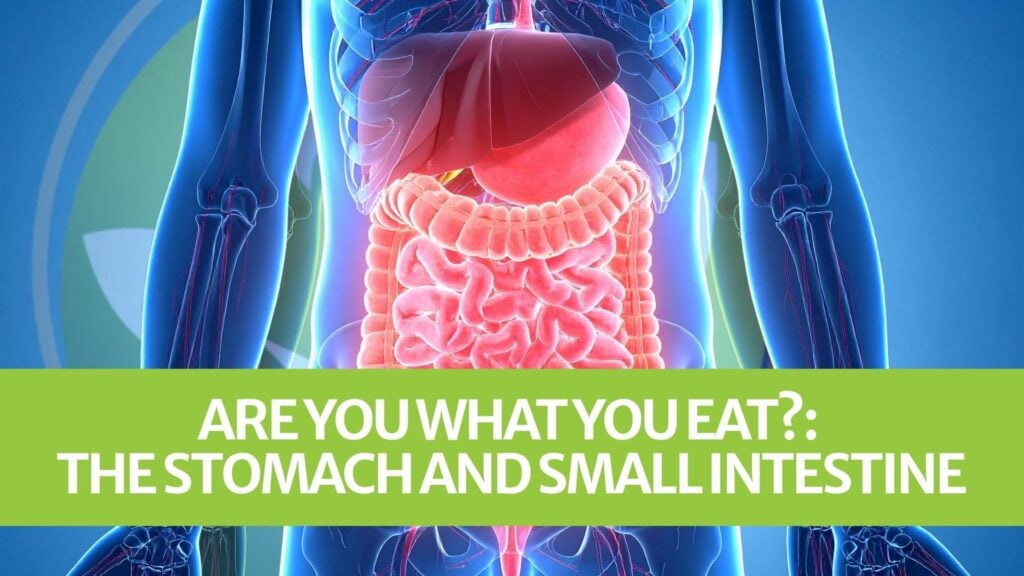
Perhaps you’ve heard: “You are what you eat,” or the Hippocrates classic, “Let food be thy medicine, thy medicine shall be thy food.”
These and other sayings have been around since the beginning of time.
In my practice, I saw that this is definitely not so. I saw patients eating fast food and garbage be surprisingly well, considering their diet, and others being strict and diligent with their food intake, having continuous health issues.
Food allergies and intolerances are as varied as personalities and physiques. And we also know that no diet is a one-size-fits-all master solution to all dietary questions — not to speak of fads, beliefs, and other “-isms.”
So what is really going on inside the body?
The Orchestra of Digestion
In keeping with the analogy that NANO SOMA® is the conductor of our cells’ metabolism, we can say that when the orchestra is synchronized, digestion works beautifully:
- stomach acid stays balanced
- nutrients are absorbed correctly
- inflammation stays controlled
- the intestinal lining repairs itself
- beneficial bacteria thrive
But when the cells’ metabolism becomes dysregulated, disharmony ensues and our digestive health begins to suffer:
- ulcers develop
- inflammation becomes chronic
- the gut barrier weakens
- pain, bloating, diarrhea, food sensitivities, and autoimmune reactions begin to emerge
NANO SOMA acts as the master conductor — constantly reading the environment, sensing stress, nutrients, toxins, and inflammation, then directing the cellular orchestra to respond in harmony.*
Inside each digestive cell are specialized “strings” of the orchestra that provide the core harmony of the performance. These are called nuclear receptors.
Nuclear receptors are tiny genetic control switches. They listen to signals from the body, the mind, food, hormones, stress chemicals, medications, and microbes, then tell the cell which genes should become active and which should remain silent.
Here are four of the most important nuclear receptors governing the stomach and small intestine.
1.PXR — The Gatekeeper
Scientific name: Pregnane X Receptor
PXR acts like the digestive system’s front-line customs officer.
Every day, your stomach and small intestine encounter thousands of foreign chemicals:
- preservatives
- pesticides
- alcohol
- medications
- plant toxins
- artificial additives
- bacterial toxins
PXR constantly scans incoming material to determine what is safe and what must be neutralized.
What PXR Regulates
Detoxification Enzymes
PXR activates specialized enzymes inside intestinal cells that chemically dismantle toxins before they damage tissue.
Chemical Flushing
It turns on microscopic export pumps that physically eject dangerous molecules back into the intestinal waste stream.
Mucus Shield Protection
PXR helps maintain the thick mucus coating that protects the stomach from its own acid. Without this slimy barrier, stomach acid would literally digest the stomach wall itself.
Inflammatory Suppression
PXR helps prevent the immune system from overreacting to ordinary food particles. This is critical because the gut is constantly exposed to foreign material.
What Happens When PXR Becomes Dysregulated
When PXR stops functioning correctly, the gut loses much of its chemical defense system.
- Chemical Toxicity: Environmental chemicals and medications begin accumulating inside gut cells because detoxification slows down.
- Severe NSAID Damage: Common pain relievers (like ibuprofen) can suddenly become highly destructive, increasing the risk of stomach bleeding and ulcers.
- Loss of Protective Mucus: The stomach lining thins and becomes directly exposed to corrosive gastric acid.
- Chronic Gut Hypersensitivity: The intestine begins reacting to normal foods as if they are dangerous invaders, producing constant inflammation and pain.
2.CAR — The Detoxifier
Scientific name: Constitutive Androstane Receptor
CAR works closely beside PXR. If PXR is the border customs officer, CAR is the toxic materials specialist brought in for more difficult threats.
CAR specializes in handling:
- complex environmental pollutants
- pharmaceutical compounds
- industrial chemicals
- metabolic waste products
It becomes especially important when the digestive tract is under heavy chemical stress.
What CAR Regulates
Heavy-Duty Detoxification
CAR activates advanced detox pathways for chemicals too difficult for ordinary defense systems to manage.
Intestinal Cell Survival
It sends survival signals that help gut cells remain alive during toxic exposure.
Sugar Processing
CAR also influences how the small intestine manages glucose during digestion.
Cellular Waste Disposal
It assists in processing damaged cellular materials and metabolic waste.
What Happens When CAR Becomes Dysregulated
- Acetaminophen Sensitivity: The digestive tract may become dangerously vulnerable to common medications like acetaminophen, even at standard doses.
- Intestinal Cell Death: Under stress, intestinal cells die faster than they can be replaced, creating raw, irritated regions inside the small intestine.
- Blood Sugar Instability: The gut loses part of its ability to regulate sugar absorption properly after meals.
- Tumor Survival: If CAR becomes permanently activated, damaged cells that should normally self-destruct may survive and continue mutating.
In orchestral terms, CAR is the emergency backup section that prevents the music from collapsing during chaos. When it fails, the system loses resilience.
3.PPAR-γ — The Master Peacekeeper
Scientific name: Peroxisome Proliferator-Activated Receptor Gamma
Among all intestinal nuclear receptors, PPAR-γ may be the greatest protector against self-destruction.
Our immune system inside the digestive tract can be dangerous. It carries enough destructive power to destroy bacteria, viruses, and infected tissue.
But our gut faces a major challenge:
It must tolerate food and beneficial bacteria while still defending against threats.
PPAR-γ acts as the master peacekeeper that prevents the immune system from attacking the intestine itself.
If NANO SOMA is conducting the orchestra, PPAR-γ is the section maintaining calm harmonic balance so the music never turns violent.
What PPAR-γ Regulates
Immune Suppression
PPAR-γ blocks inflammatory genetic programs that cause swelling, tissue destruction, and ulcer formation.
Cell Specialization
It helps young stem cells mature into fully functional intestinal cells.
Energy Regulation
PPAR-γ helps gut cells use glucose properly for energy and repair.
Healthy Microbiome Support
It creates conditions that allow beneficial bacteria to flourish.
What Happens When PPAR-γ Becomes Dysregulated
- Severe Intestinal Ulcers: Without immune control, white blood cells begin attacking the intestinal lining itself.
- Loss of Absorption Function: Stem cells fail to mature correctly, reducing the intestine’s ability to absorb nutrients.
- Insulin Resistance: The gut loses part of its ability to regulate metabolic hormones involved in blood sugar control.
- Microbiome Collapse: Beneficial bacteria decline while inflammatory microbes take over. This is one of the reasons why chronic inflammation can spiral into widespread digestive dysfunction.
4. GR — The Stress and Acid Manager
Scientific name: Glucocorticoid Receptor
GR responds to cortisol, the body’s primary stress hormone. This receptor forms one of the main communication links between emotional stress and digestive symptoms.
Anyone who has experienced:
- stress-induced stomach pain
- nervous diarrhea
- cramping before exams
- appetite shutdown during anxiety
has already experienced GR signaling in action.
GR carefully regulates the balance between stomach acid, tissue repair, and stress adaptation.
What GR Regulates
Stomach Acid Balance
GR helps control specialized acid-producing cells in the stomach.
Natural Antacid Secretion
It regulates bicarbonate release, which neutralizes excess acid.
Emergency Tissue Repair
GR speeds healing of microscopic injuries caused by digestion itself.
Stress Adaptation
During stress, GR changes digestive blood flow and intestinal movement patterns.
What Happens When GR Becomes Dysregulated
- Stomach Ulcers: Excess stress signaling may cause acid production to rise while protective defenses fall. Acid can eventually erode through the stomach wall itself.
- Bleeding Micro-Tears: Daily microscopic injuries stop healing correctly.
- Stress-Induced IBS: The stomach and small intestine become hypersensitive to stress hormones, leading to cramps, spasms, diarrhea, or constipation.
- Severe Leaky Gut: Chronic stress can cause intestinal cells to pull apart, allowing bacteria and toxins into the bloodstream.
In the orchestra analogy, GR controls tempo during crisis situations. When the stress conductor loses rhythm, the entire digestive symphony destabilizes.
There are, of course, many more nuclear receptors that play a role in the digestion process. These four are just to show how complex the cellular function is regulated by the nuclear receptors.
The Bigger Picture: Harmony vs. Chaos
The stomach and small intestine are not passive food-processing tubes.
They are intelligent, dynamic ecosystems regulated through constant genetic communication.
Nuclear receptors act like the string section of the digestive orchestra:
- maintaining timing
- controlling intensity
- stabilizing harmony
- responding to environmental change
NANO SOMA serves as the conductor coordinating the entire cellular performance.
When the conductor and the strings remain synchronized:
- inflammation stays controlled
- stomach acid remains balanced
- toxins are neutralized
- tissue repairs itself
- beneficial bacteria survive
- digestion functions smoothly
But when these nuclear receptors become dysregulated, the harmony deteriorates into inflammatory noise.
The result may appear as:
- ulcers
- acid reflux
- IBS
- food sensitivities
- chronic inflammation
- leaky gut
- microbiome imbalance
- malabsorption
- autoimmune disease
Modern digestive disease is increasingly understood not simply as a problem of food or infection, but as a failure of cellular communication and genetic regulation inside the gut itself.
And at the center of all that communication is the remarkable orchestra conducted by NANO SOMA, helping us keep all our cells in homeostatic harmony.
One of our managers reported that, after taking NANO SOMA regularly, his food sensitivities disappeared.* We have read many such testimonials.
NANO SOMA: helping thee to let thy food be thy medicine.
Bon appétit!
Are You Ready To See What It Can Do For You?
Tap the button below and discover how you can!
*These statements have not been evaluated by the US Food and Drug Administration. This product is not intended to diagnose or prescribe for any medical condition, nor to prevent, treat, mitigate, or cure such condition(s). If you have any illness or medical condition, consult your healthcare provider.

